
'/%3E%3C/svg%3E)

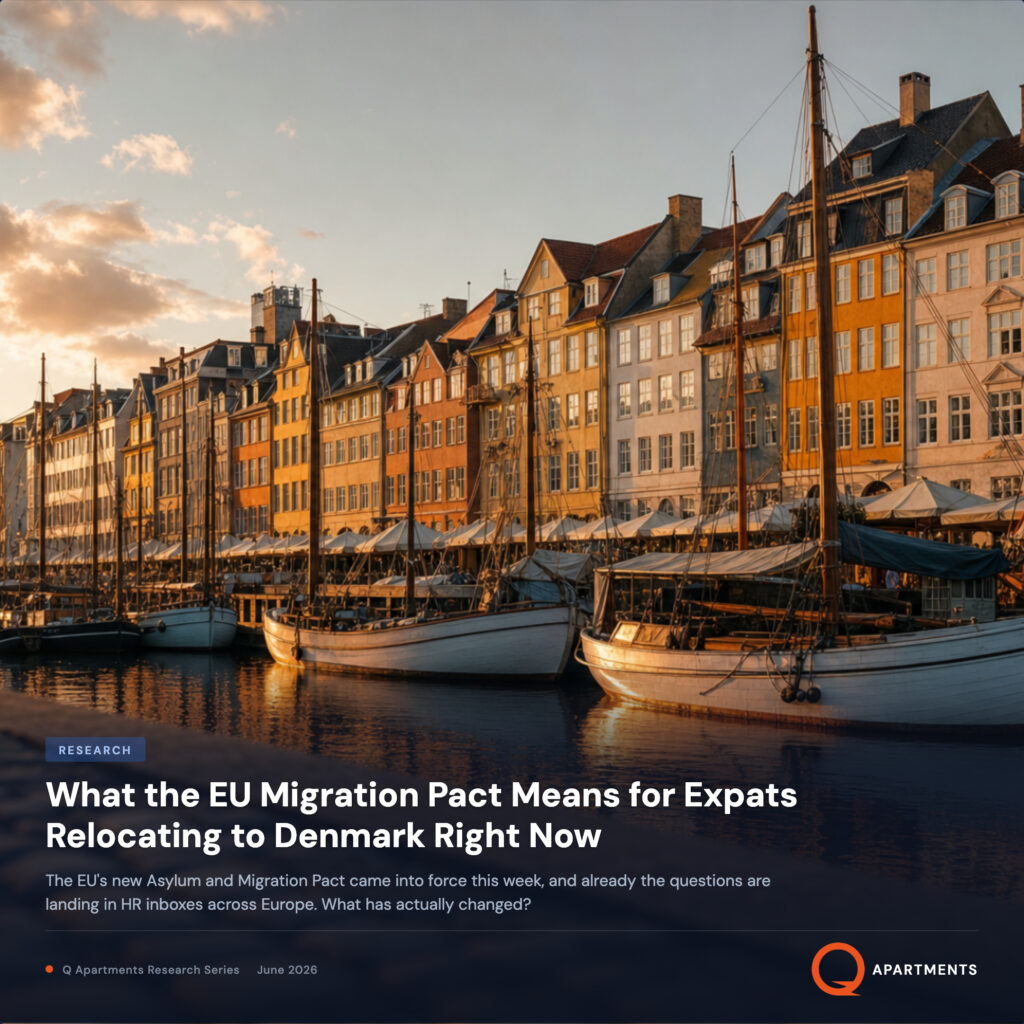
What the EU Migration Pact Means for Expats Relocating to Denmark Right Now
The EU’s new Asylum and Migration Pact came into force this week, and already the questions are landing in HR inboxes across Europe. What has actually changed? Will relocating employees face new hurdles? Does this affect intra-EU mobility at all?
If you are an HR manager, global mobility lead, or relocation professional with people moving to Copenhagen, here is the clear-eyed breakdown you need.
What the Pact Actually Covers
The EU Migration Pact is primarily focused on external border management, asylum procedures, and the screening of third-country nationals arriving at the EU’s outer borders. Its core provisions tighten how member states process asylum claims and share responsibility for arrivals at the bloc’s perimeter.
It is not a framework designed to restrict the movement of skilled professionals, corporate transferees, or legally working expats relocating within or into the EU. For the vast majority of internationally mobile talent, the pact’s direct day-to-day impact is limited.
Why the Confusion Is Understandable
The confusion is real, and it is worth acknowledging. Several EU member states, including Denmark, have maintained internal border controls in recent months, a situation covered by the Copenhagen Post this week. When employees see headlines about migration policy tightening across Europe, it is entirely reasonable for them to ask whether their relocation timeline or visa status might be affected.
Denmark operates under specific opt-outs from certain EU justice and home affairs measures, which already makes its immigration framework slightly different from other member states. Third-country nationals relocating to Denmark still need to navigate the Danish Immigration Service for residence and work permits, and those processes run on their own timelines, independent of the new pact.
What Has Not Changed for Relocating Professionals
For EU and EEA nationals moving to Copenhagen for work, freedom of movement rights remain intact. Registration with the Danish authorities is still required, but the process itself has not been altered by the pact.
For third-country nationals, the Danish work and residence permit system continues to operate as before. Processing times, documentation requirements, and the pathways available under schemes such as the Positive List or the Pay Limit Scheme have not been revised as a result of this legislation.
In short: the fundamentals of relocating skilled talent to Denmark are unchanged. The pact is not a barrier for the professionals your organisation is moving.
Why Administrative Uncertainty Still Matters for Housing
Here is where it does get relevant for HR teams. Even when the rules themselves have not changed, moments of high-profile policy news create administrative friction. Employees ask more questions. Permit processing can slow as agencies manage increased enquiry volumes. Relocation timelines become less predictable.
When timelines compress or shift unexpectedly, having a housing solution already in place in Copenhagen is not a nice-to-have. It is essential. A newly arrived employee waiting on a permit clarification still needs somewhere comfortable and fully equipped to live. A corporate transferee whose start date shifts by two weeks cannot be left scrambling for short-notice accommodation.
The Case for a Copenhagen Housing Partner, Not Just a Listing
This is precisely why forward-thinking HR teams and relocation firms work with a partner who is already embedded in Copenhagen, not just browsing the same platforms your employees can access themselves.
Q Apartments Copenhagen has been housing relocating professionals since 1996. With more than 750 furnished apartments across 12 or more Copenhagen locations, flexible contract terms, and a team with decades of experience in the local market, the groundwork is already done. When your employee lands, their home is ready.
Flexible tenancy lengths mean you are not locked into commitments made before you knew exactly how an assignment would unfold. And with a 30-minute emergency rehousing response guarantee and 24-hour support, the unexpected is covered too.
The Bottom Line
The EU Migration Pact changes the landscape at Europe’s external borders. It does not fundamentally alter what it takes to relocate skilled professionals to Copenhagen. But it is a timely reminder that in a world of shifting policy headlines and tightening administrative timelines, having the right partners in place before you need them is the smartest move an HR team can make.
If your organisation is planning relocations to Denmark in 2026 or beyond, start the conversation with Q Apartments Copenhagen today. Explore available apartments at qapartments-cph.com or speak to the team on +45 35 24 55 99.